The comfort trap of AI agents

We are entering the age of agents.

Not just tools, not just copilots—but agents. Systems that act, decide, and increasingly do things for us. And to be honest, they are incredibly good at it.

Take driving. With systems like Tesla’s Full Self-Driving (FSD), the experience shifts from active control to passive supervision. The car steers, brakes, navigates. You just “watch.” Or at least, you’re supposed to.

Or take software engineering. Tools like Claude Code can review pull requests, suggest architectural changes, even generate production-ready code. Tasks that used to require hours of deep thinking can now be compressed into minutes.

This is the promise of agents: effortless leverage.


The Hidden Contract

But there is an implicit contract we don’t talk about enough:

The human is still responsible for the outcome.

Even when the agent acts, you own the consequences.

Tesla makes this explicit—FSD is still a Level 2 system, requiring constant human attention. Yet reality tells a different story. Investigations in 2026 linked multiple crashes, including a fatal one, to FSD behavior under certain conditions (Reuters). In another case, a former autonomous driving executive described how his Tesla crashed while FSD was engaged, emphasizing how easy it is to overtrust a system that works “almost perfectly” (Business Insider).

“Almost perfect” might be the most dangerous phrase in AI.

Because it changes human behavior.


The Drift Toward Passivity

Humans are not designed to stay vigilant in passive roles.

When a system performs well 95% of the time, we adapt. We relax. We stop double-checking. We stop questioning. We stop being in the loop.

This is not a flaw—it’s human nature.

But it creates a dangerous dynamic:

  • The agent becomes more capable
  • The human becomes less attentive
  • The system still requires human intervention

That gap is where failures happen.

Research into autonomous systems shows that many incidents are tied not just to technical failure, but to this handoff problem—when humans are suddenly expected to take over from automation they’ve stopped actively monitoring.

And when that moment comes, it’s often too late.


When Convenience Becomes Risk

The real risk of AI agents is not that they fail.

It’s that they succeed—just enough.

Enough to earn trust.
Enough to build reliance.
Enough to quietly remove humans from the process.

Until one day, something breaks.

And when it does, we instinctively ask:

  • “Why didn’t the AI handle it?”
  • “Why didn’t anyone catch this?”

But the uncomfortable truth is:

We stopped looking.


The Illusion of Delegation

We like to think we’re delegating tasks to AI.

But in many cases, we’re actually delegating attention.

And attention is the one thing we can’t afford to outsource.

Because responsibility doesn’t scale down with effort.

If anything, it becomes more important.


A More Honest Mental Model

Maybe we need a better way to think about agents.

Not as replacements.
Not even as assistants.

But as high-speed amplifiers of intent—with unpredictable edge cases.

They can accelerate you.
But they can also amplify your blind spots.


Staying in the Loop

So what does this mean in practice?

It doesn’t mean rejecting agents. That’s unrealistic—and frankly, wasteful.

It means designing and using them with a different mindset:

  • Treat outputs as proposals, not answers
  • Stay actively engaged in critical decisions
  • Assume failure is always possible
  • Optimize for awareness, not just efficiency

Because the cost of being “out of the loop” is not linear.

It’s catastrophic.


Final Thought

AI agents are not removing responsibility.

They are repositioning it.

From doing → to overseeing.
From executing → to judging.

And that shift is harder than it looks.

Because the better the agent becomes,
the easier it is for us to disappear.

And that might be the biggest risk of all.
My three main takeaways from measure camp toronto 2025

Measure camp 2025, a renowned community-based worldwide event in digital analytics, took place at Humber College’s downtown Toronto campus on Saturday, October 4th. This marks the second year of the event’s Toronto location. The organizers, including Jose, Marc, James, and Melissa, along with Humber College students, supported the event. The full agenda is available here.

This unique “camp” format eliminates keynote speakers, instead encouraging participants to propose topics and present or facilitate them in a workshop-like format.. The camp features multiple rooms, allowing participants to join events based on their interests. Attendance is free, and food is provided (in Toronto, sponsored by the organizer). The conference is always held on Saturdays, attracting enthusiastic participants.

I’ve been attending industry events in digital analytics and measurement field since 2017. Measure Camp is the natural evolution of eMetrics and Digital Analytics Association, with its clear mandate of “knowledge transfer” in an open environment. While keynote speaking may not suit everyone, I believe everyone has valuable insights to share, and the format is most welcoming.

Here are the three main takeaways for me

  • GenAI usage and adaptation on this industry
  • Connecting with peers beyond “networking”
  • Stress-free presenting(facilitating) a session

Continue Reading

Training plan to maximize my performance in the 2025 Chinese Alumni tennis tournament

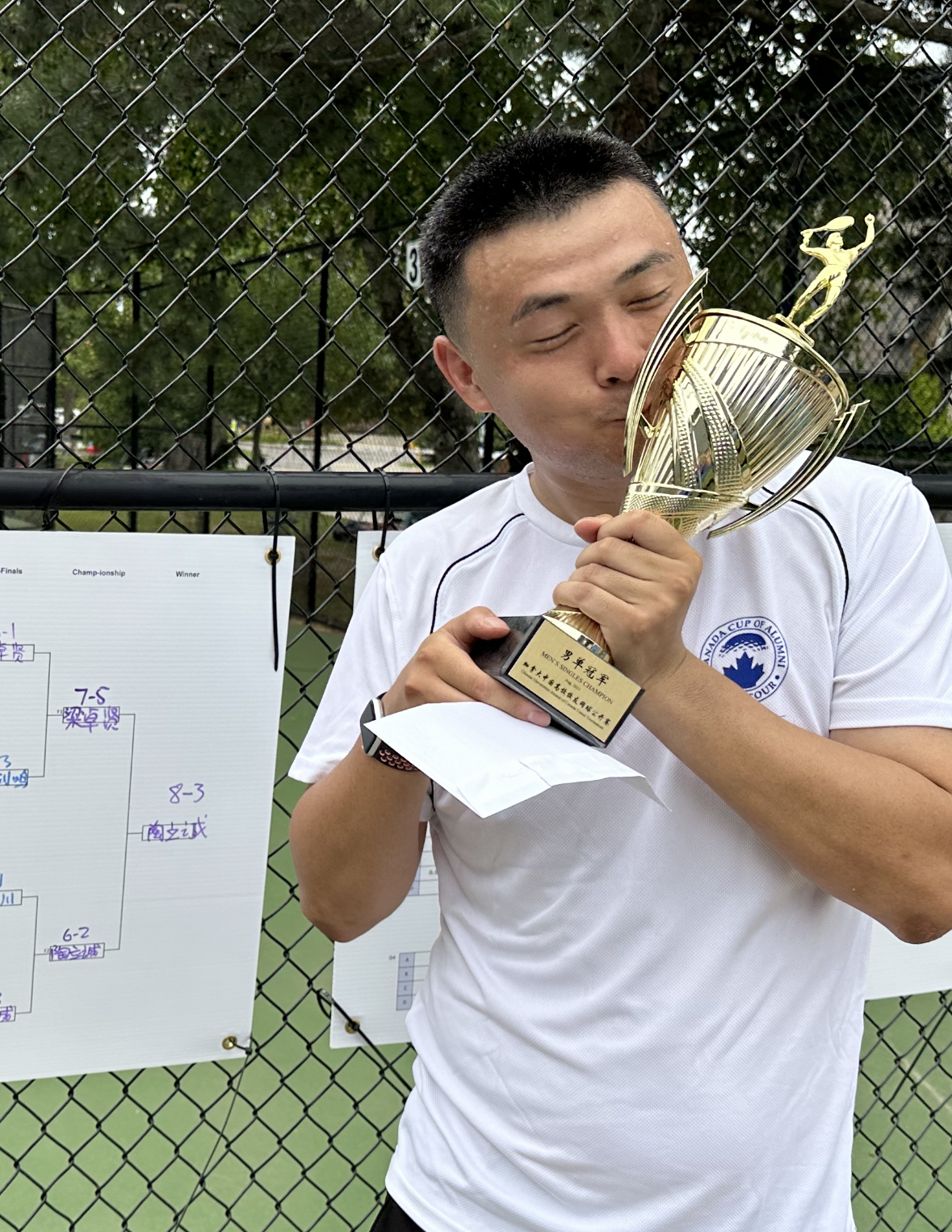
It is roughly 1 month away from the 4th Chinese alumni tennis tournament in Toronto .  I won the men’s single event tourney in both 2023 and 2024.   Those are undoubtfuly the highlights of my personal life.

This year I’d like to document my preparation plan toward this event , so I can be both comfident and comfortable walking into the tournament without regrets.

Continue Reading

Getting my 100% verified UTR rating after 6 verified matches

This summer, I decided to try something new for my tennis journey by actively participating in UTR (Universal Tennis Registry) . This was also inspired by UTR’s increased popularity in Shanghai , where I was visiting last year.  I am seeing it thru my own eyes that it was no longer just a rating used in North America (mostly in US).

In this post, I’d like share my experience this summer with UTR. In total I paid $80 for two leagues tournament.  I will be covering

  • How to UTR rating system works (vs NTRP and WTN)
  • Its “power users’ price & value from a non-US resident perspective
  • Overall experience for me after completing first 6 ranked matches

Continue Reading

Lost in 3 set from my First UTR Match – start my 2024 season

UTR (Universal Tennis Rating) is a globally recognized rating system for tennis players.  After being an outsider looking for a few years, I finally played my first UTR tournament (Flex League) in Toronto.  Overall the experience was positive, despite losing a close match in 3 sets.  In this post, I’d like to share my overall experience and my match breakdown.

Continue Reading

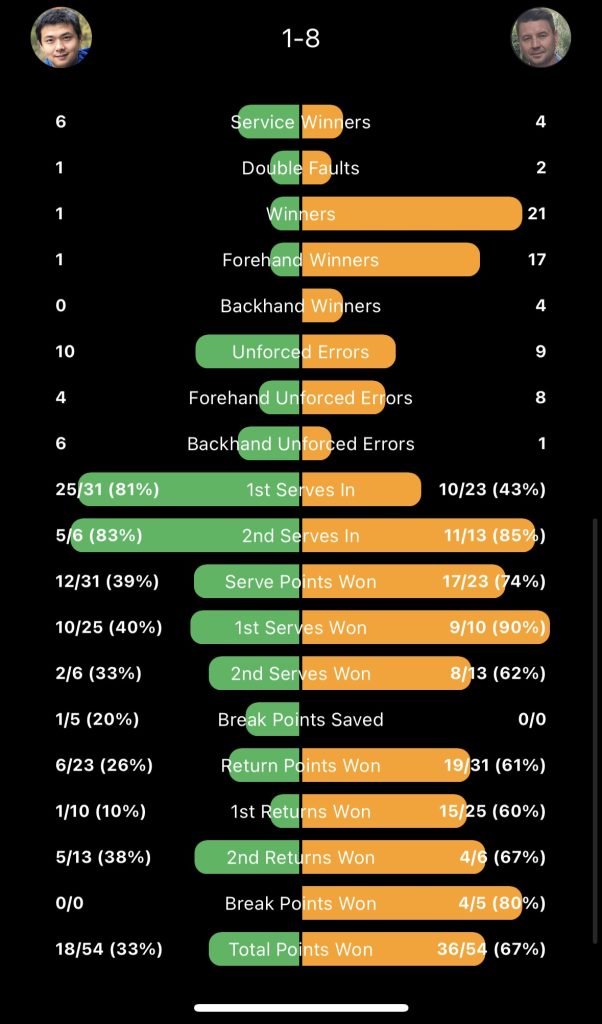
2023’s ladder season starts with a L

SwingVision post game stats

It is a bit tough pill to swallow with a lob sided L for the 1st ladder game this season. At the same time it wasn’t a surprise either.

On my own side – I wasn’t in my good form with 5kg overweight. Today also marked my 1st time playing at the Milton club.

My opponent is today is a solid 5.0 player with an aggressive attacking style. He doesn’t seem to have weakness on forehand, backhand or serve.

It is a discouraging but hopefully it is providing extra motivation to get back to my peak form. I don’t have many years left to improve my skills. Losing games like this against players significant older than me was not what I wanted to play.

Playing Witcher 3 in Chinese on PlayStation 5 from a non Chinese speaking country

I was super pumped to hear the Witcher 3 next gen update annouced a few weeks ago, particularly the Chinese voice-over.  From what I read it means 

  • The game has been fully translated to Chinese, including all the conversation and content. This mean the context is much more easy to read for native Chinese speaking population
  • The character of the game is speaking Chinese.  This would bring the experience of the game to a whole new level.

Unfortuntatley, due to Sony’s decision of seperating users by geogrpahic region, Chinese language isn’t made available in counties do not using it as a official language.  This is such a shameless policy which I am not going to spend words to complained about.  After spending hours research online with no luck, I’d like to take it to my own hand, and write this short blog to share with you how I made it work. 

The total cost of this solution is HK$233.4 (40% off of regular price)- which is about ~$50 CAD in my local currency.  You might also need an Alipay account to process the payment.

Step by step guide

  • Sign up a new PlayStation Network account in PSN Hongkong: 
  • Purchase the game in PSN Hong Kong.  
  • Payment:
    • if you have an existing Alipay account, choose Alipay method.
    • If not – you can try Paypal (didn’t work for me unfortunatley),  or purchase PSN gift card from a third party site like play-asia
    • The credit card method is unlikely to work because it will verify the address in Hong Kong.
  • Login to playstaion console using the new PSN Hong Kong ID
    • Download the newly purchased game (it should be downloading automatically) 
    • Verify the game version by choose “manage game content” – it should have Chinese listed there
    • Fortunately, you can using the cross-save feature to sync your save from other regions. You can simply just click “manage reward” feature on the main menu
Losing a semi-final at milton year end tournament 2022

Losing a semi-final at milton year end tournament 2022


It is a mixed feeling for me right now.

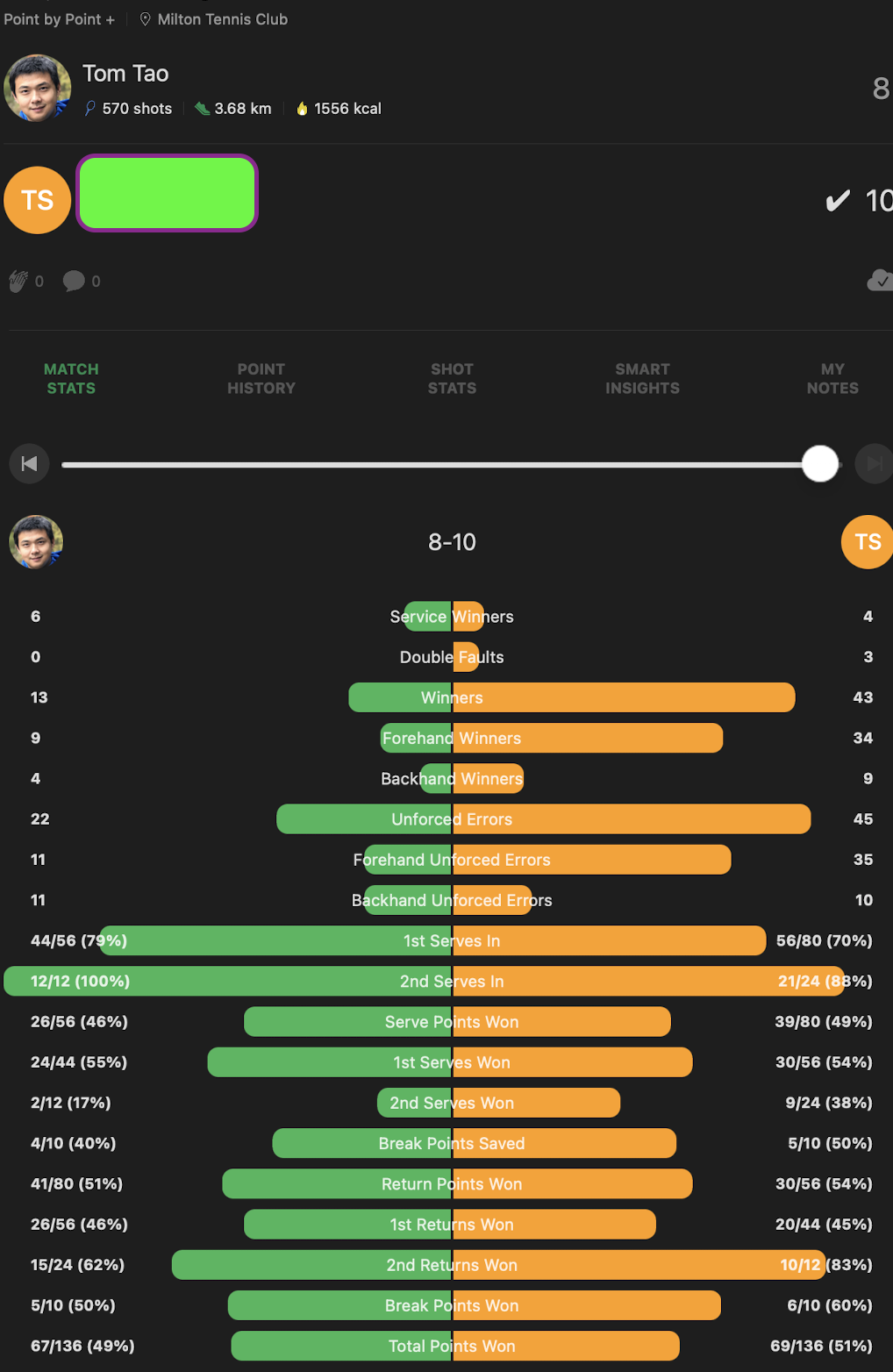
Losing a close match brought disappointment, particularly for a game I feel I was actually the better player.  But I failed to convert on those points that really matter to the match’s outcome.

At the same time, I am also satisfied and relieved that I don’t need to play the final tomorrow against the same player I lost in the final last year.  After a marathon match(2 hr full), I would appreciate taking tomorrow off and focusing on my family to prepare for Monday’s work.  It would NOT be good if I win today and then retire for tomorrow’s final at 8pm.

Dave did an outstanding job again organizing the whole thing I enjoy the whole tournament at Milton tennis club, and hopefully have another chance later this year.

Let me breakdown today’s game this way

No SwingVision consent today

Definitely a surprise.  I have played against this opponent in a ladder match and he has no issue with it. But today he refused, claiming last time was enough.  I respected his preference, but find it a bit weird because of the inconsistency.  It is 2nd time received a refusal for setting up the equipment.

Line call argument

The first game starts with two controversial calls. At one point I believe he waited until the balls bounced twice, and 2nd point he hit it long so I called out.  He immediately raised his voice and complained.  I ended up giving him the benefit of the doubt on both times.   One of the goals I came in today is to enjoy the game and not get into arguments on line calls.

After that, I gave him all the points on my side and didn’t argue a bit on any points he called out on his side. What upset me is there is one point initially I thought was out so I raised my hand.  However the balls actually bounced in with topspin, so I changed my call and call it in.  He started to taunt me, saying words like “you are going to call it out right?”.  I told him that it was very disrespectful and I choose not to argue with him only because of his age.

Struggle to get back to the game

Maybe because of the incident, I wasn’t playing my best game and quickly I was behind 2:4 and later 3:5. In game 7, I faced multiple game points but ended up breaking him after a 13 min dogfight.  The same goes for game 9, in which I clawed it back and broke him again to make it 4:5

There are still questionable calls during these games, but I chose to give him the benefit of the doubt.  The outcome of these games is barely impacted by these calls.  I also felt relieved about not falling behind by 3 game score.

My main tactics were NOT working at all – his backhand was very solid today, very different from the last time we played in the ladder match.

Took the lead

After failing behind 3:5,  I took the next three games and got my first lead at 6:5.  That is the point I starts to feel I am the better player today :  I am almost 20 years younger, in good physical condition, and we are in the 2nd hour.  On game points, I noticed his main weapon (forehand cross-court attacks) has more and more errors.

We exchanged a few breaks and then I had a critical hold to break the game open at 8:6.  If we are playing an 8 game set, it would be over. Sadly the format of the semi-final is first to 10.

He got frustrated and served two double faults at 6-8.  Now it is 0:30 , 6:8.  I went to court 3 to get those balls, feeling that if I broke him again to make it 6:9, the game would be over.   And I was telling myself – he isn’t quitting – I need to take the game. Sadly – I didn’t execute this plan well.  He ended up using his main weapon again and got two consecutive points to even it to 30:30.   I wish I could go to the net and show my balls !  I didn’t, and the tide turned again.

Losing 4 games in a row and letting the opponent closing out

Even though I was fully prepared for a dogfight with a marathon match, my opponent’s competitiveness and the ability to raise his level & focus impressed me.  My legs are starting to cramp a bit.  How can he sustain this physical challenge?

My mentality wasn’t right, and I ended up paying for it.

We went back and forth on this critical game, but then there is a questionable line call again.  I am 90% sure my forehand lob was in, but he called it out when we are at the 3rd deuce 6:8.   I was a little upset and then quickly made an easy error on his next serve.  In hindsight, I lose this game because of the easy error on the serve, not on the questionable calls. Now it became 7:8.

To this point, I have switched my tactics to start to feed the balls into his forehand, because his backhand was rock solid. I had some success by leading 40:15 again on 7:8.  Again I was playing conservative by generating short balls, and he took advantage of that with another consecutive forehand winner cross court. He ended up even the score at 8-8 after saving 5 game points.

At this point, he has switched tactics by using his forehand to get the angle, then approaching the nets to finish the points. To his credit, he was flawless during those overheads which I found not easy for a relatively short opponent.  He closed the game out over the next two games, in which I didn’t play well at all against his new tactics.  This is the same one Matthew was using against me.

In closing

Losing is a bit painful, but it can motivate me to get better.   I didn’t go to the net at all – after concluding it not effective by watching our last game highlight.  That was definitely a miss.  I had the physical height advantage.

It is still a hell of an experience. I still enjoy it and this is really the beauty of tennis games.