Category: Sports

The comfort trap of AI agents

We are entering the age of agents.

Not just tools, not just copilots—but agents. Systems that act, decide, and increasingly do things for us. And to be honest, they are incredibly good at it.

Take driving. With systems like Tesla’s Full Self-Driving (FSD), the experience shifts from active control to passive supervision. The car steers, brakes, navigates. You just “watch.” Or at least, you’re supposed to.

Or take software engineering. Tools like Claude Code can review pull requests, suggest architectural changes, even generate production-ready code. Tasks that used to require hours of deep thinking can now be compressed into minutes.

This is the promise of agents: effortless leverage.


The Hidden Contract

But there is an implicit contract we don’t talk about enough:

The human is still responsible for the outcome.

Even when the agent acts, you own the consequences.

Tesla makes this explicit—FSD is still a Level 2 system, requiring constant human attention. Yet reality tells a different story. Investigations in 2026 linked multiple crashes, including a fatal one, to FSD behavior under certain conditions (Reuters). In another case, a former autonomous driving executive described how his Tesla crashed while FSD was engaged, emphasizing how easy it is to overtrust a system that works “almost perfectly” (Business Insider).

“Almost perfect” might be the most dangerous phrase in AI.

Because it changes human behavior.


The Drift Toward Passivity

Humans are not designed to stay vigilant in passive roles.

When a system performs well 95% of the time, we adapt. We relax. We stop double-checking. We stop questioning. We stop being in the loop.

This is not a flaw—it’s human nature.

But it creates a dangerous dynamic:

  • The agent becomes more capable
  • The human becomes less attentive
  • The system still requires human intervention

That gap is where failures happen.

Research into autonomous systems shows that many incidents are tied not just to technical failure, but to this handoff problem—when humans are suddenly expected to take over from automation they’ve stopped actively monitoring.

And when that moment comes, it’s often too late.


When Convenience Becomes Risk

The real risk of AI agents is not that they fail.

It’s that they succeed—just enough.

Enough to earn trust.
Enough to build reliance.
Enough to quietly remove humans from the process.

Until one day, something breaks.

And when it does, we instinctively ask:

  • “Why didn’t the AI handle it?”
  • “Why didn’t anyone catch this?”

But the uncomfortable truth is:

We stopped looking.


The Illusion of Delegation

We like to think we’re delegating tasks to AI.

But in many cases, we’re actually delegating attention.

And attention is the one thing we can’t afford to outsource.

Because responsibility doesn’t scale down with effort.

If anything, it becomes more important.


A More Honest Mental Model

Maybe we need a better way to think about agents.

Not as replacements.
Not even as assistants.

But as high-speed amplifiers of intent—with unpredictable edge cases.

They can accelerate you.
But they can also amplify your blind spots.


Staying in the Loop

So what does this mean in practice?

It doesn’t mean rejecting agents. That’s unrealistic—and frankly, wasteful.

It means designing and using them with a different mindset:

  • Treat outputs as proposals, not answers
  • Stay actively engaged in critical decisions
  • Assume failure is always possible
  • Optimize for awareness, not just efficiency

Because the cost of being “out of the loop” is not linear.

It’s catastrophic.


Final Thought

AI agents are not removing responsibility.

They are repositioning it.

From doing → to overseeing.
From executing → to judging.

And that shift is harder than it looks.

Because the better the agent becomes,
the easier it is for us to disappear.

And that might be the biggest risk of all.
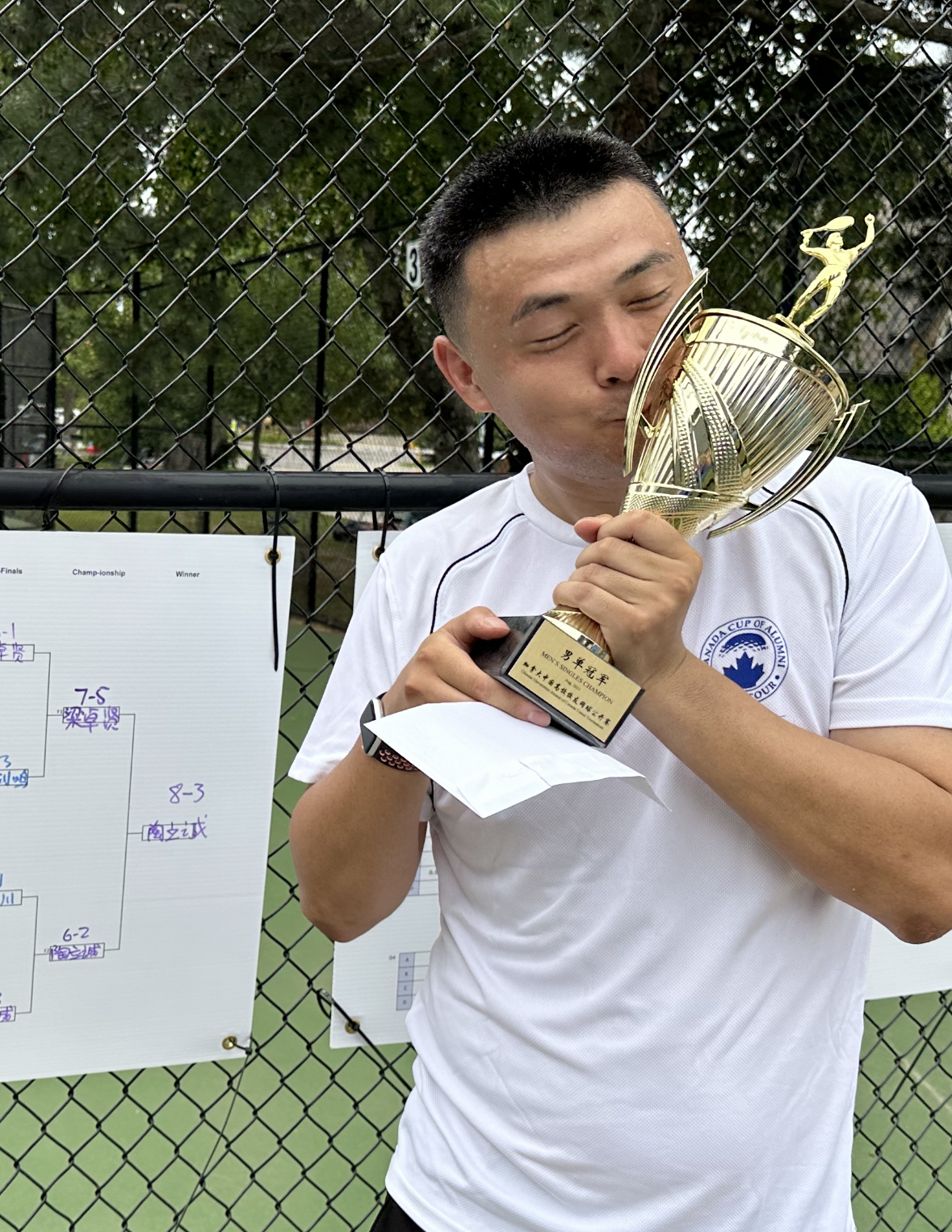
Getting my 100% verified UTR rating after 6 verified matches

This summer, I decided to try something new for my tennis journey by actively participating in UTR (Universal Tennis Registry) . This was also inspired by UTR’s increased popularity in Shanghai , where I was visiting last year.  I am seeing it thru my own eyes that it was no longer just a rating used in North America (mostly in US).

In this post, I’d like share my experience this summer with UTR. In total I paid $80 for two leagues tournament.  I will be covering

  • How to UTR rating system works (vs NTRP and WTN)
  • Its “power users’ price & value from a non-US resident perspective
  • Overall experience for me after completing first 6 ranked matches

Continue Reading

Lost in 3 set from my First UTR Match – start my 2024 season

UTR (Universal Tennis Rating) is a globally recognized rating system for tennis players.  After being an outsider looking for a few years, I finally played my first UTR tournament (Flex League) in Toronto.  Overall the experience was positive, despite losing a close match in 3 sets.  In this post, I’d like to share my overall experience and my match breakdown.

Continue Reading

2023’s ladder season starts with a L

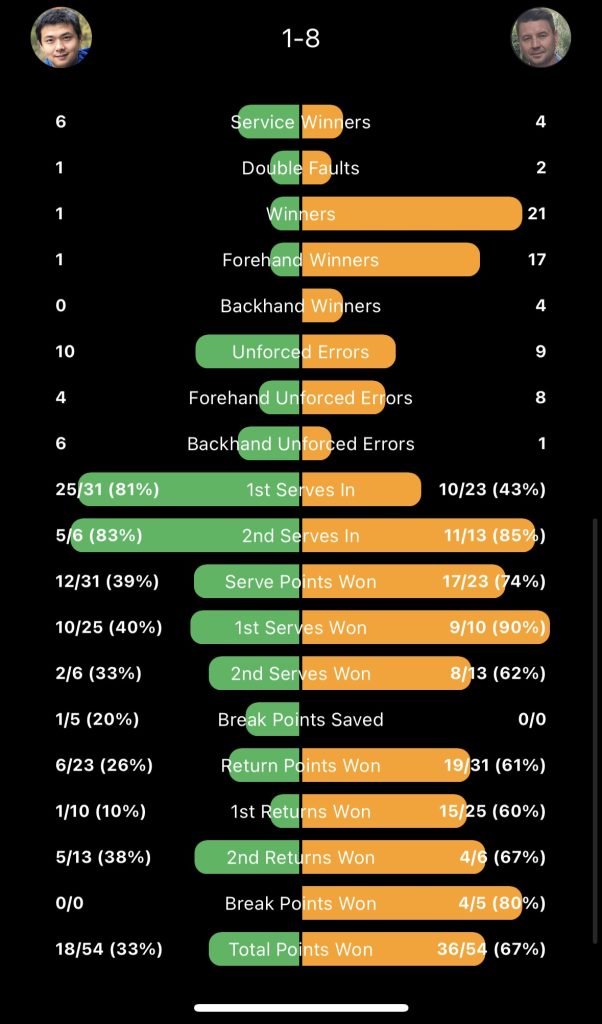
SwingVision post game stats

It is a bit tough pill to swallow with a lob sided L for the 1st ladder game this season. At the same time it wasn’t a surprise either.

On my own side – I wasn’t in my good form with 5kg overweight. Today also marked my 1st time playing at the Milton club.

My opponent is today is a solid 5.0 player with an aggressive attacking style. He doesn’t seem to have weakness on forehand, backhand or serve.

It is a discouraging but hopefully it is providing extra motivation to get back to my peak form. I don’t have many years left to improve my skills. Losing games like this against players significant older than me was not what I wanted to play.

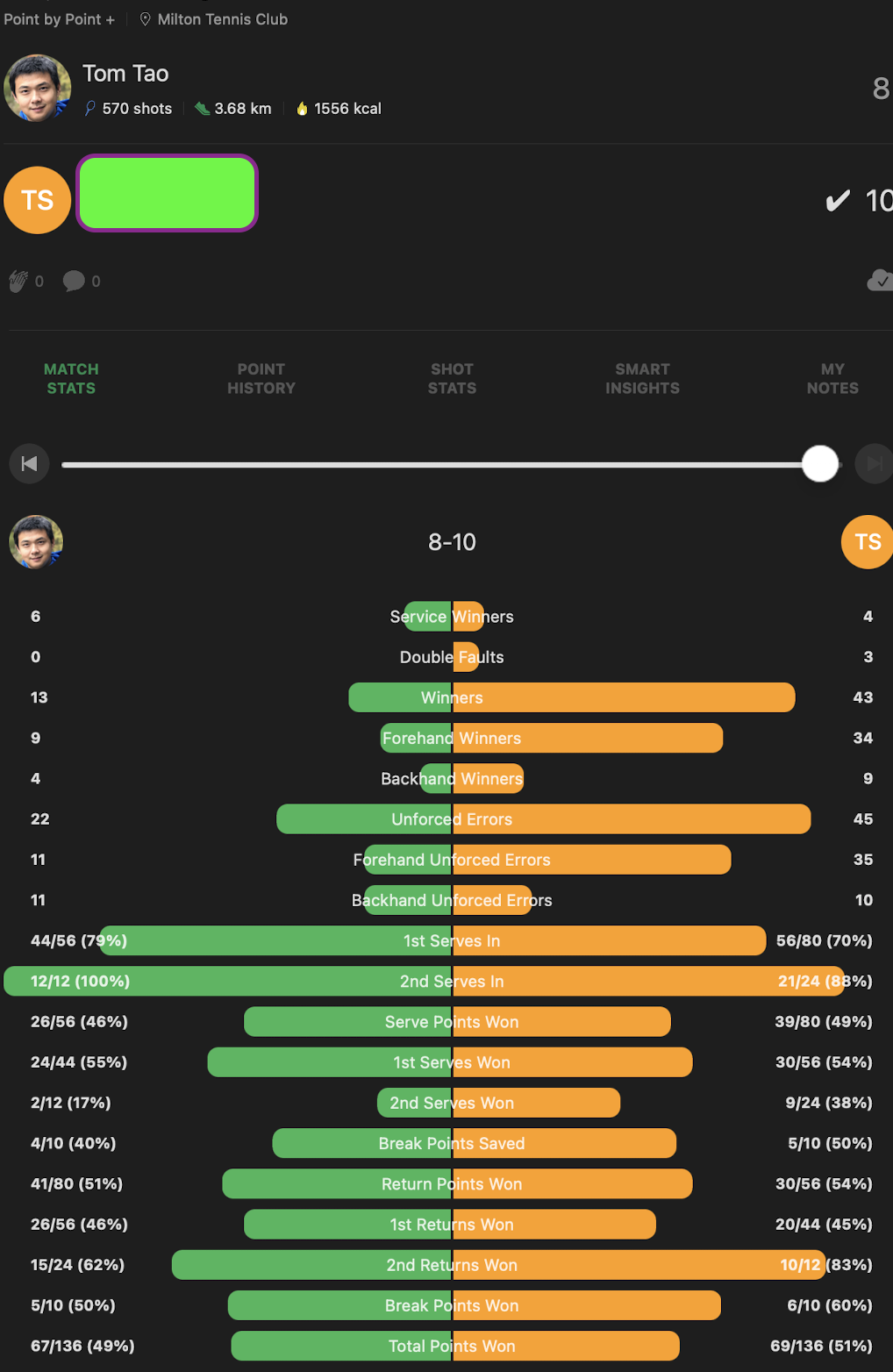
Losing a semi-final at milton year end tournament 2022

Losing a semi-final at milton year end tournament 2022


It is a mixed feeling for me right now.

Losing a close match brought disappointment, particularly for a game I feel I was actually the better player.  But I failed to convert on those points that really matter to the match’s outcome.

At the same time, I am also satisfied and relieved that I don’t need to play the final tomorrow against the same player I lost in the final last year.  After a marathon match(2 hr full), I would appreciate taking tomorrow off and focusing on my family to prepare for Monday’s work.  It would NOT be good if I win today and then retire for tomorrow’s final at 8pm.

Dave did an outstanding job again organizing the whole thing I enjoy the whole tournament at Milton tennis club, and hopefully have another chance later this year.

Let me breakdown today’s game this way

No SwingVision consent today

Definitely a surprise.  I have played against this opponent in a ladder match and he has no issue with it. But today he refused, claiming last time was enough.  I respected his preference, but find it a bit weird because of the inconsistency.  It is 2nd time received a refusal for setting up the equipment.

Line call argument

The first game starts with two controversial calls. At one point I believe he waited until the balls bounced twice, and 2nd point he hit it long so I called out.  He immediately raised his voice and complained.  I ended up giving him the benefit of the doubt on both times.   One of the goals I came in today is to enjoy the game and not get into arguments on line calls.

After that, I gave him all the points on my side and didn’t argue a bit on any points he called out on his side. What upset me is there is one point initially I thought was out so I raised my hand.  However the balls actually bounced in with topspin, so I changed my call and call it in.  He started to taunt me, saying words like “you are going to call it out right?”.  I told him that it was very disrespectful and I choose not to argue with him only because of his age.

Struggle to get back to the game

Maybe because of the incident, I wasn’t playing my best game and quickly I was behind 2:4 and later 3:5. In game 7, I faced multiple game points but ended up breaking him after a 13 min dogfight.  The same goes for game 9, in which I clawed it back and broke him again to make it 4:5

There are still questionable calls during these games, but I chose to give him the benefit of the doubt.  The outcome of these games is barely impacted by these calls.  I also felt relieved about not falling behind by 3 game score.

My main tactics were NOT working at all – his backhand was very solid today, very different from the last time we played in the ladder match.

Took the lead

After failing behind 3:5,  I took the next three games and got my first lead at 6:5.  That is the point I starts to feel I am the better player today :  I am almost 20 years younger, in good physical condition, and we are in the 2nd hour.  On game points, I noticed his main weapon (forehand cross-court attacks) has more and more errors.

We exchanged a few breaks and then I had a critical hold to break the game open at 8:6.  If we are playing an 8 game set, it would be over. Sadly the format of the semi-final is first to 10.

He got frustrated and served two double faults at 6-8.  Now it is 0:30 , 6:8.  I went to court 3 to get those balls, feeling that if I broke him again to make it 6:9, the game would be over.   And I was telling myself – he isn’t quitting – I need to take the game. Sadly – I didn’t execute this plan well.  He ended up using his main weapon again and got two consecutive points to even it to 30:30.   I wish I could go to the net and show my balls !  I didn’t, and the tide turned again.

Losing 4 games in a row and letting the opponent closing out

Even though I was fully prepared for a dogfight with a marathon match, my opponent’s competitiveness and the ability to raise his level & focus impressed me.  My legs are starting to cramp a bit.  How can he sustain this physical challenge?

My mentality wasn’t right, and I ended up paying for it.

We went back and forth on this critical game, but then there is a questionable line call again.  I am 90% sure my forehand lob was in, but he called it out when we are at the 3rd deuce 6:8.   I was a little upset and then quickly made an easy error on his next serve.  In hindsight, I lose this game because of the easy error on the serve, not on the questionable calls. Now it became 7:8.

To this point, I have switched my tactics to start to feed the balls into his forehand, because his backhand was rock solid. I had some success by leading 40:15 again on 7:8.  Again I was playing conservative by generating short balls, and he took advantage of that with another consecutive forehand winner cross court. He ended up even the score at 8-8 after saving 5 game points.

At this point, he has switched tactics by using his forehand to get the angle, then approaching the nets to finish the points. To his credit, he was flawless during those overheads which I found not easy for a relatively short opponent.  He closed the game out over the next two games, in which I didn’t play well at all against his new tactics.  This is the same one Matthew was using against me.

In closing

Losing is a bit painful, but it can motivate me to get better.   I didn’t go to the net at all – after concluding it not effective by watching our last game highlight.  That was definitely a miss.  I had the physical height advantage.

It is still a hell of an experience. I still enjoy it and this is really the beauty of tennis games.


The first real ladder game against a 5.0 player

What happens today (fact)

  • This is my third ladder match at Milton tennis club.  My opponent is Andrew.  He ranked two spot(#2) above me(#4). 
  • The weather wasn’t great.  We almost cancelled the match due to the rain earlier. Realizing our upcoming schedule might not fit for another match, both of us made effort to get to the court and finish the ladder match. 
  • The result is one-sided.  I lost by 1:6.   We chose to use the 6-game instead of the 8-game pro set due to the weather delay.  The game only lasted 25 minutes.
  • Total points played: 45.  I won 38% of them (17 of 45).
  • I served quite well today (88% first serve in) and had 5 service winners.  

My hot takes 

  • I lost today because I feel my opponent is the better player
  • I wasn’t able to match my opponent’s intensity & shot speed.  When feel pressured and rushed, my rallies were often short. This gave my opponents too many chances to move forward and attack inside out.  This momentum keeps going and I was in a hole 0-4 very quickly.
  • My word playing at Milton’s Court 1 (showroom court) is 0 for 3 so far.  (lost to Henry, Suriyan, and now Andrew)I should avoid playing at this court for important matches in the future 🙁
  • When holding break points twice, I chose to play defence and let my opponent dictate the points. This works with ppl with/below my level, not today. When losing those two precious games, I lost my momentum and  my confidence

My post-game analysis after watching the video from SwingVision- 

  • I lost today because I chose the wrong tactics – I played too safe and bet my opponents would beat himself with unforced errors.  In my experience, It never worked when playing against opponents with both skills & experience.
  • My defense wasn’t up to my standard.  There are a few times when Andrew started to attack inside-out, and my returning shots were immediately falling short.  That makes me an easy target to get “finished” , and this led to the quick drop of my confidence. 
  • Even though my service was solid, I wasn’t hitting enough on his backhand, particularly for my 2nd serve.  As a result, he can attack my 2nd serve with ease, and got 2 winners out of my first two service games.  That also led to me having doubt of my abilities in the match.

Next steps

  • In order to work on my aggressiveness, the slinger bag I bought a few months ago is suitable to work on “techniques”.  
  • Mental part would be more difficult – essentially how can I feel more “confident” to generate my own pace ?  I guess the only thing I can do is to play against players slightly above my skill level this summer. 


First outdoor game in 2022 season – my tennis journal #1

Finally, I am able to play my first outdoor game, recorded using my newest equipment fence cap (bought on Black Friday 2021). It is a pro-set game with Kevin – my doubles partner from Credit Valley Club Inter-county “B” team. We didn’t play very often recently, as he spent more time on doubles and I focused on singles match plays.

The game was played at Glen Abby community part upon my request. The weather is cloudy with mild wind conditions, 8 degrees celsius in early after. I believe this to be an ideal weather condition for tennis, but Kevin feels it is a bit too cold. He said the balls feel too hard with the cold temperate. My topspin heavy style neutralized the bad weather condition, as I usually don’t need to hit the ball perfectly to generate points.

For the actual scores, I won the 1st set 8:3 by winning the last 4 games straight. The 2nd set was much closer and ended with 1-1 when the times ran out (the total score for the 2nd set was 15-15).

My conditioning is still nowhere close to my peak level. If we have enough time to finish, the 2nd set would be a lot closer. Fatigue seems to impact me much more than Kevin.

What I like about my game today is I was able to hit 2 winners on the forehand cross-court, each with over 85km/h on the line. I don’t usually attack that angle on my previous matches

What is interesting is my backhand slice shots type % – only 28% slices. I used to only use slices on my backhand so this is definitely encouraging to see. It could also indicate Kevin didn’t attack my backhand with deep balls much.

2021 Tennis Journey Recap

2021 is a challenging year for me.  I am quite satisfied with the progress I have made with my tennis journey.  I believe I became a better tennis player overall with the technology I have been using.

If you have arrived here, I hope you are a tennis fan (not just a speculator) like me, who is curious to learn to adopt modern technology to improve and enjoy the game. Here are the three things I am aiming to help you achieve :

  • Get a better understanding of how to get the most value out of SwingVision
  • Learn some new tricks and avoid the pitfall I experienced
  • Be inspired to improve your own tennis

Continue Reading